Does your furry friend start sneezing or scratching every time they roll around in the grass? Grass allergies in dogs can be a frustrating puzzle for pet owners.
You want your pup to enjoy the great outdoors without the discomfort and irritation that allergies bring. Fortunately, understanding and treating your dog's grass allergies doesn't have to be complicated or overwhelming. Imagine seeing your dog romp freely through the yard, free from the itch and irritation that once held them back.
You'll discover simple and effective ways to help your dog overcome their grass allergies and return to their happy, playful self. Read on to find out how you can make this a reality for your beloved pet.
Symptoms Of Grass Allergies In Dogs
Identifying grass allergies in your dog early can make a huge difference in their comfort and health. Symptoms often show up in ways that might seem normal at first but signal discomfort when you look closer. Knowing what to watch for helps you act quickly and ease your dog's suffering.
Common Signs To Watch For
Dogs with grass allergies often scratch or lick their skin excessively. You might notice redness, swelling, or small bumps, especially on their paws, belly, and face. Hair loss or scabs from constant scratching are also common.
Other signs include sneezing, watery eyes, or runny nose that look like a cold but don’t go away. Some dogs develop ear infections that keep coming back, which can be frustrating if you don’t realize allergies are the cause. These symptoms can be subtle at first, so keeping an eye on any unusual changes is key.
Behavioral Changes Due To Allergies
Have you noticed your dog acting restless or whining more than usual? Allergies can make dogs uncomfortable, leading to changes in behavior. They might avoid playing outside or seem less energetic.
Some dogs become irritable or shy because of constant itching and discomfort. You might also catch them chewing their paws or rubbing their face against furniture. These behaviors are your dog’s way of trying to relieve irritation, so don’t ignore them.

Credit: www.dutch.com
Diagnosing Grass Allergies
Diagnosing grass allergies in dogs can be tricky because symptoms often mimic other common skin problems. Pinpointing the exact cause requires a careful and systematic approach. Knowing the right steps to take helps you act quickly to ease your dog's discomfort.
Veterinary Allergy Testing
Veterinarians use allergy testing to identify if your dog is sensitive to grass pollen. This usually involves either a blood test or intradermal skin testing. Both methods reveal how your dog’s immune system reacts to specific allergens.
Blood tests measure antibodies related to allergic reactions, while skin tests involve injecting small amounts of allergens under the skin. If your dog shows a reaction, it points to a likely allergy. These tests are important because they provide clear evidence to guide treatment decisions.
Elimination Of Other Causes
Before confirming grass allergies, your vet will rule out other possible problems. Parasites like fleas, infections, or food allergies can cause similar itching and redness. Eliminating these causes is essential to avoid misdiagnosis.
Your vet may recommend a trial period using flea control products or switching your dog’s diet. If symptoms improve, it suggests another cause rather than grass allergy. This process ensures your dog receives the right care without unnecessary treatments.
Home Remedies For Relief
Home remedies can help soothe your dog's grass allergy symptoms. They reduce itchiness and skin irritation naturally. These remedies support your dog's comfort and healing at home. Try simple steps that improve skin health and boost immunity.
Bathing And Skin Care
Regular baths wash away pollen and grass particles. Use a gentle, hypoallergenic shampoo made for dogs. Avoid harsh soaps that dry out the skin. Rinse well to remove all shampoo residues.
After bathing, dry your dog thoroughly. Moist skin invites bacteria and worsens itching. Brush your dog's coat to remove loose hair and dirt. It also stimulates skin blood flow.
Apply natural moisturizers like coconut oil to dry spots. They soothe irritation and support skin healing. Keep your dog’s bedding clean to reduce allergens in the home.
Dietary Adjustments
Feed a balanced diet rich in omega-3 fatty acids. These healthy fats reduce inflammation and improve skin condition. Consider adding fish oil supplements after consulting your vet.
Include fresh vegetables and antioxidants in your dog’s meals. They strengthen the immune system and fight allergies. Avoid artificial additives and fillers that may trigger reactions.
Give your dog plenty of fresh water to keep the skin hydrated. Proper hydration helps flush out toxins and allergens from the body.
Medications For Allergy Management
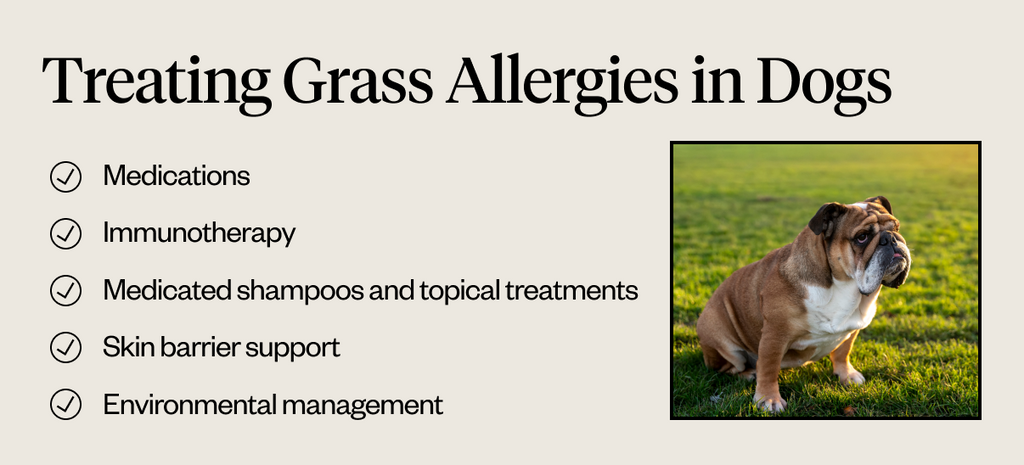
Medications can help manage your dog's grass allergy symptoms. They reduce itching, redness, and swelling. Using the right medicine eases your dog's discomfort. Always consult a vet before starting any treatment.
Antihistamines And Steroids
Antihistamines block the chemicals that cause allergy symptoms. They help reduce itching and sneezing. Common antihistamines for dogs include diphenhydramine and cetirizine.
Steroids are stronger and reduce inflammation quickly. They are used for severe allergy cases. Steroids may come as pills or injections. Long-term use requires careful vet supervision due to side effects.
Topical Treatments
Topical treatments work directly on the skin. They include creams, sprays, and shampoos. These products soothe irritated skin and reduce itching.
- Medicated shampoos help wash away allergens and calm the skin.
- Anti-itch sprays provide fast relief from discomfort.
- Creams with hydrocortisone reduce local inflammation.
Topical treatments are safe and easy to apply. They support overall allergy management alongside oral medications.
Environmental Control Strategies
Controlling your dog’s environment is key to managing grass allergies effectively. By reducing contact with allergens, you can help lessen your pet’s symptoms and improve their comfort. Let’s look at practical ways to adjust your surroundings to protect your furry friend.
Avoiding Grass Exposure
One of the simplest yet most effective ways to protect your dog is to limit their time on grass. Avoiding walks in grassy areas during peak pollen times, usually early morning and late afternoon, can reduce exposure significantly.
Use paths, sidewalks, or even consider a leash walk on pavement instead of letting your dog roam freely on lawns. Have you noticed how your dog reacts after a stroll through tall grass? This might be a clear sign to change your walking route.
After outdoor play, wipe your dog’s paws and coat with a damp cloth to remove pollen and grass particles. This quick step can prevent allergens from spreading inside your home, keeping your dog’s environment cleaner and safer.
Yard Maintenance Tips
Keeping your yard allergy-friendly means managing the grass and plants carefully. Regularly mowing the lawn helps keep grass short and reduces pollen release, which can lower allergy triggers.
Consider planting dog-safe ground covers like clover or artificial turf in high-traffic areas to give your dog a comfortable spot without the grass allergy risk. You might be surprised how well these alternatives work to keep your pet happy and symptom-free.
Watering your yard frequently can also settle dust and pollen, making the environment less irritating for your dog. Are you watering your lawn enough to keep the allergens down? Small changes in yard care routines can make a big difference.
Allergy Shots And Immunotherapy
Allergy shots and immunotherapy offer a promising path for dogs struggling with grass allergies. Unlike quick fixes, these treatments work by gradually training your dog’s immune system to tolerate allergens better. If you’ve noticed your dog scratching or sneezing every spring, this approach might change how you manage their discomfort for the long haul.
How Immunotherapy Works
Immunotherapy involves giving your dog small doses of the specific allergens causing the reaction. These doses start very low and increase over time, helping the immune system adapt and reduce its overreaction.
Your vet typically administers these allergy shots regularly, often starting weekly and then spacing out as your dog improves. You might also have the option of sublingual drops, which some dogs tolerate better than injections.
This process doesn’t provide instant relief but aims to address the root cause of the allergy. Have you ever thought about how retraining the immune system could be more effective than just masking symptoms?
Long-term Benefits
One of the biggest advantages of immunotherapy is its potential to provide lasting relief. Many dogs experience fewer symptoms or even complete remission after a year or more of treatment.
Unlike antihistamines or steroids, allergy shots don’t carry the risk of long-term side effects. This means your dog can enjoy outdoor playtime without constant itching or discomfort.
While immunotherapy requires commitment, it can reduce your visits to the vet and the need for daily medications. Isn’t it worth considering a treatment that improves your dog’s quality of life over time?
Preventing Future Allergic Reactions
Preventing future allergic reactions in dogs with grass allergies requires consistent care and attention. Taking proactive steps helps reduce symptoms and keeps your dog comfortable. Regular monitoring and adjustments to their routine protect against flare-ups.
Regular Vet Check-ups
Schedule vet visits at least twice a year. The vet can track your dog's allergy progress and adjust treatments. Early detection of new symptoms prevents serious issues. Discuss any changes in your dog's behavior or skin condition. Your vet may recommend allergy tests or new medications. Keep all vet advice and treatments up to date for best results.
Seasonal Care Tips
Limit your dog’s exposure to grass during peak allergy seasons. Mornings and evenings may have less pollen. Wipe your dog’s paws and coat after outdoor walks. Use a damp cloth or pet-friendly wipes to remove allergens. Consider using protective clothing or booties in the yard. Regularly wash your dog’s bedding and toys to remove allergens. Keep your home clean and well-ventilated to reduce indoor pollen. These small steps help lower allergy flare-ups and protect your dog’s health.

Credit: askavet.com

Credit: trynutripod.com
Frequently Asked Questions
What Are Common Symptoms Of Grass Allergies In Dogs?
Common symptoms include itching, redness, sneezing, and watery eyes. Dogs may also lick or chew their paws excessively. These signs often worsen after outdoor exposure to grass or pollen.
How Can I Prevent My Dog’s Grass Allergy Flare-ups?
Limit outdoor time during high pollen seasons. Wipe your dog’s paws and coat after walks. Use hypoallergenic shampoos and keep your lawn grass short to reduce allergens.
What Treatments Are Effective For Dog Grass Allergies?
Antihistamines and corticosteroids prescribed by a vet can reduce symptoms. Regular baths help remove allergens. Allergy shots or immunotherapy may be recommended for severe cases.
When Should I See A Vet For My Dog’s Grass Allergy?
See a vet if symptoms persist or worsen despite home care. Professional diagnosis ensures proper treatment and rules out other conditions like infections or fleas.
Conclusion
Treating your dog’s grass allergies takes patience and care. Keep your dog clean and dry after outdoor time. Use vet-approved medicines to reduce itching and swelling. Change your dog’s environment to limit grass exposure. Watch for signs of allergy to act quickly.
Healthy skin means a happier dog. Small steps can make a big difference. Stay consistent and observe your dog’s progress. A comfortable dog is a joyful companion.