Is your dog constantly chewing on themselves, leaving you worried and frustrated? You’re not alone.
This behavior can be uncomfortable for your pet and stressful for you. But don’t worry—there are simple steps you can take to help your furry friend stop this habit. You’ll discover effective ways to understand why your dog is chewing and how to put an end to it for good.
Keep reading, because your dog’s comfort and happiness are just a few solutions away.
Reasons Dogs Chew Themselves
Noticing your dog chewing on themselves can be worrying. Understanding why they do it is the first step to helping them feel better. Dogs often chew their skin due to a variety of reasons, from physical discomfort to emotional stress. Knowing these causes lets you take action that truly helps your furry friend.
Allergies And Skin Irritations
Dogs can develop allergies to food, pollen, or even household cleaners. These allergies often cause itchy, irritated skin that your dog tries to soothe by chewing. If you see redness, bumps, or hair loss, allergies might be the cause.
Think about any recent changes in your dog’s diet or environment. Could new treats, detergents, or plants be triggering this reaction? Identifying and removing the allergen can reduce the urge to chew.
Parasites And Infections
Parasites like fleas and ticks are common culprits behind excessive chewing. These pests cause intense itching and discomfort. If your dog scratches and chews constantly, check for tiny bugs or flea dirt on their fur.
Skin infections, often bacterial or fungal, can also lead to chewing. These infections sometimes develop after scratching damages the skin. A vet visit can confirm the issue and provide proper treatment to stop the cycle.
Anxiety And Stress
Just like people, dogs can chew themselves when they feel anxious or stressed. Separation from you, loud noises, or changes in routine might make your dog nervous. This chewing becomes a way to self-soothe during stressful moments.
Ask yourself if your dog’s environment has changed recently or if they are spending more time alone. Addressing their anxiety with comfort, exercise, or professional help can reduce this behavior.
Boredom And Behavioral Issues
Sometimes chewing happens simply because your dog is bored. Lack of stimulation or insufficient exercise can lead to destructive habits. Dogs need mental and physical activities to stay happy and calm.
Have you noticed your dog chewing more when left alone or after a short walk? Adding interactive toys, longer playtimes, or training sessions can keep their mind busy and reduce chewing urges.

Credit: www.walmart.com
Identifying The Cause
Understanding why your dog chews on themselves is the first step to stopping the behavior effectively. Identifying the cause helps you address the root problem rather than just the symptoms. Sometimes the reason is obvious, but other times it takes careful observation and a bit of detective work.
Observing Behavior Patterns
Watch when and where your dog tends to chew. Is it after walks, during rest, or when left alone? Noticing patterns can reveal triggers like anxiety, boredom, or environmental irritants.
Pay attention to the frequency and intensity of the chewing. Does your dog chew more during specific times of the day or in response to certain events? These clues guide you toward possible causes.
Checking For Physical Symptoms
Look closely at your dog’s skin and fur around the areas they chew. Redness, swelling, sores, or hair loss can point to allergies, infections, or parasites.
Scratch marks or a foul odor may also indicate an underlying medical problem. Don’t ignore subtle signs like dry, flaky skin or small bumps—they can be the start of bigger issues.
Consulting A Veterinarian
If you spot worrying symptoms or if your dog’s chewing doesn’t improve, a vet visit is essential. Professionals can run tests to diagnose infections, allergies, or skin conditions.
Be ready to share your observations about your dog’s behavior and environment. Your detailed notes help the vet find the exact cause and recommend the right treatment.
Immediate Relief Methods
When your dog starts chewing on themselves, finding immediate relief is crucial. This behavior can cause discomfort and lead to infections if left unchecked. Quick action not only soothes your pet but also helps you identify any underlying issues early on.
Using Soothing Shampoos
Soothing shampoos can calm irritated skin fast. Look for products containing oatmeal, aloe vera, or chamomile—these ingredients help reduce redness and itching.
I once used an oatmeal shampoo on my dog after a sudden flare-up of itchy skin. The relief was noticeable within a day, and the chewing lessened significantly. Have you checked if your dog's shampoo is gentle enough for sensitive skin?
Applying Topical Treatments
Topical treatments provide direct relief to the affected areas. You can use sprays, creams, or ointments that contain hydrocortisone or natural anti-inflammatories like calendula.
Make sure to apply these treatments exactly where your dog is chewing. This targeted approach not only soothes the area but can also prevent your dog from reopening wounds. Do you have a vet-recommended topical treatment ready at home?
Preventing Access With E-collars
E-collars are effective tools to stop your dog from reaching itchy spots. While they might seem uncomfortable, they protect healing skin and stop further damage.
After using an E-collar for a few days, my dog’s chewing habit was under control, giving the skin time to recover. It’s a tough look but a temporary and necessary step for healing. Have you tried using an E-collar to break the cycle of chewing?

Credit: theonlinedogtrainer.com
Long-term Care Strategies
Long-term care plays a vital role in stopping dogs from chewing on themselves. Consistent attention to their health, comfort, and environment helps reduce this behavior. It requires patience and a combination of strategies that focus on overall well-being.
Improving Diet And Nutrition
A balanced diet strengthens your dog’s skin and coat. Poor nutrition can lead to itching and discomfort. Include foods rich in omega-3 and omega-6 fatty acids. These nutrients support healthy skin and reduce inflammation.
Consider adding supplements like fish oil after consulting your vet. Avoid foods that cause allergies or sensitivities. Watch for signs such as redness, swelling, or hair loss linked to diet.
Regular Grooming And Skin Care
Grooming keeps your dog’s skin clean and free from irritants. Brush their coat regularly to remove dirt and loose hair. Bathing with gentle, dog-friendly shampoos prevents dryness and itchiness.
Check for fleas, ticks, or other parasites often. Parasites cause itching and lead to chewing. Use vet-approved treatments to control infestations. Keep their bedding clean to avoid skin problems.
Creating A Stress-free Environment
Stress can trigger excessive chewing and licking. Dogs need a calm space where they feel safe. Limit loud noises and sudden changes in routine. Provide a comfortable resting area with familiar toys or blankets.
Spend quality time with your dog to build trust and reduce anxiety. Avoid leaving them alone for long periods. Use calming aids like pheromone diffusers if needed.
Engaging In Physical And Mental Activities
Exercise burns energy that might otherwise cause nervous chewing. Take your dog for daily walks and play interactive games. Activities like fetch or tug-of-war provide physical and mental stimulation.
Introduce puzzle toys that challenge their mind. Mental engagement helps prevent boredom and stress. Rotate toys regularly to keep interest high and reduce chewing on themselves.
When To Seek Professional Help
Knowing when to seek professional help is crucial for your dog’s health. Chewing on themselves can signal many problems. Some issues need expert care to prevent serious damage. Early intervention can stop the problem from getting worse.
Signs Of Severe Skin Damage
- Open wounds or bleeding areas
- Thick scabs or crusty patches
- Hair loss in large spots
- Red, swollen, or infected skin
- Foul smell coming from the skin
These signs show your dog’s skin is badly affected. Immediate care is necessary to avoid infections.
Persistent Or Worsening Symptoms
- Chewing continues despite home care
- Increased redness or swelling
- New sores or rashes appear
- Dog shows signs of pain or distress
- Behavior changes like restlessness or irritability
Persistent symptoms mean the problem is not healing. A vet can find the root cause and provide relief.
Specialist Treatments And Therapies
Veterinarians may use special treatments to heal your dog’s skin. They include:
- Medicated shampoos and topical ointments
- Antibiotics or antifungal medicines
- Allergy testing and specific diets
- Behavioral therapy for anxiety-related chewing
- Advanced tests like skin biopsies or blood work
Specialist care targets the exact cause of the chewing. This approach ensures better healing and comfort.
Credit: theonlinedogtrainer.com
Frequently Asked Questions
Why Do Dogs Chew On Themselves?
Dogs may chew on themselves due to allergies, parasites, or anxiety. Allergies can cause itchy skin, leading them to chew. Parasites like fleas or mites can also trigger this behavior. Anxiety or stress can result in self-chewing as a coping mechanism.
Observing your dog's behavior can help identify the cause.
How Can I Stop My Dog From Chewing?
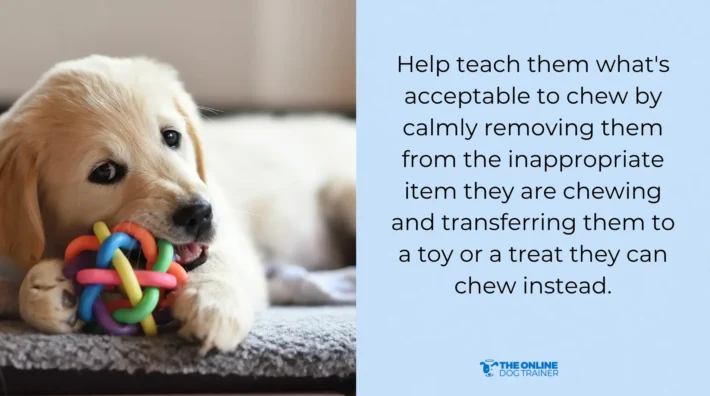
To stop your dog from chewing, identify the root cause first. If allergies or parasites are the issue, consult a vet for proper treatment. Provide mental stimulation and chew toys to distract them. Regular exercise can reduce anxiety, which may decrease self-chewing behavior.
Are There Home Remedies For Dog Chewing?
Yes, several home remedies can help reduce dog chewing. Oatmeal baths can soothe itchy skin. Coconut oil can moisturize and reduce irritation. Apple cider vinegar, diluted with water, can deter chewing. Always consult your vet before trying home remedies to ensure safety for your dog.
When Should I Consult A Vet?
Consult a vet if chewing persists despite interventions. This could indicate underlying health issues. If the dog shows signs of infection or severe irritation, professional evaluation is necessary. Timely veterinary assistance ensures proper diagnosis and treatment, preventing further discomfort and potential complications.
Conclusion
Stopping dogs from chewing themselves takes patience and care. Watch your dog closely to find the cause. Treat any skin problems or allergies quickly. Give your dog plenty of attention and exercise. Keep their nails trimmed and skin clean. Use vet advice to choose the right treatment.
Small changes can make a big difference. Your dog will feel happier and healthier soon. Keep trying and stay calm. You can help your dog live a better life.