Have you ever looked up and wondered if that dark bird flying by was a raven or a crow? You’re not alone.
Many people mix these two birds up because they look so similar. But is a raven the same bird as a crow? Knowing the difference can change how you see the world around you. Keep reading, and you’ll discover simple ways to tell them apart that you can use every time you spot one.
This will make your next birdwatching moment much more exciting and meaningful.

Credit: www.reddit.com
Physical Traits
Ravens and crows share many similarities, but their physical traits reveal key differences. Observing size, feather texture, beak shape, and tail design helps tell these birds apart. Understanding these traits makes birdwatching easier and more fun.
Size And Shape
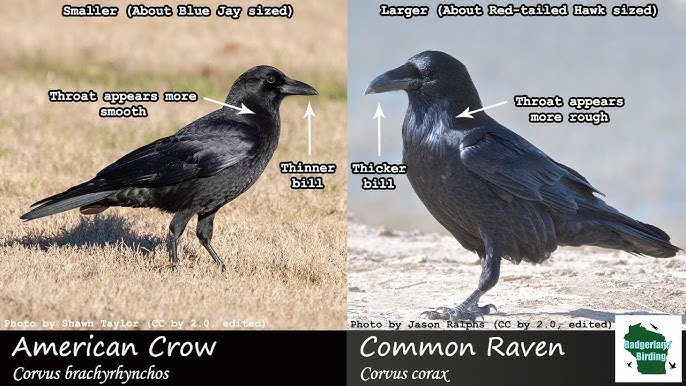
Ravens are larger than crows. They have a bigger body and longer wings.
Crows are smaller and more compact. Their wings are shorter and rounder.
Ravens have a heavier build and thicker neck. Crows look slimmer and lighter.
Feather Characteristics
Ravens have shaggy feathers around their throat. These feathers look rough and scruffy.
Crows have smooth and even feathers. Their feathers have a glossy black shine.
Ravens’ feathers may appear darker and more iridescent than crows’ feathers.
Beak And Tail Differences
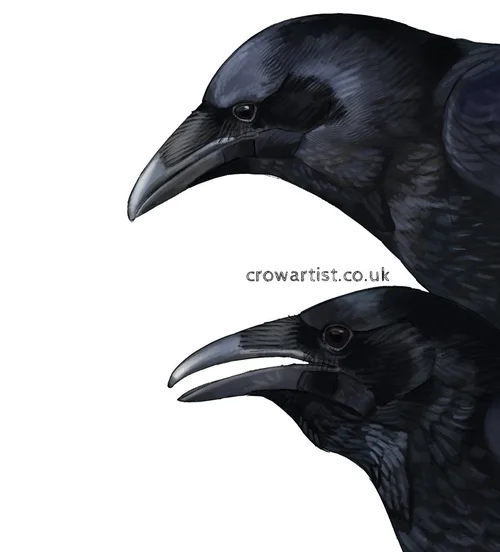
Ravens have a large, thick, and curved beak. Their beak looks strong and powerful.
Crows have a smaller, straighter beak. It is less heavy than a raven’s beak.
The tail shape differs too. Ravens’ tails are wedge-shaped or pointed.
Crows have fan-shaped tails with rounded edges when flying.
Behavioral Patterns
Ravens and crows share many behaviors, but they also show clear differences. Understanding their behavioral patterns helps to tell them apart. These patterns include how they fly, the sounds they make, and how they act in groups.
Flight Styles
Ravens have a soaring flight with smooth glides and deep wing beats. They often ride thermals and circle high in the sky. Crows have a more direct and steady flight. Their wing beats are quicker and more consistent. Ravens can perform aerial acrobatics like rolls and somersaults. Crows rarely show such complex flying tricks.
Vocalizations
Ravens produce a deep, croaking sound that is rough and varied. They also make a wide range of clicks and gurgles. Crows have a clearer, cawing call that is sharp and repetitive. Their calls are simpler but still loud and distinct. Ravens use their voice to communicate complex messages. Crows mostly use their calls for alerts and social contact.
Social Habits
Ravens often travel in pairs or small groups, showing strong bonds. They prefer remote areas and are less social than crows. Crows are highly social birds that gather in large flocks. They live near humans and adapt well to cities. Both birds use tools and show intelligence, but crows are more likely to share food and work together.
Habitat And Range
The habitat and range of ravens and crows reveal interesting differences that help you tell these birds apart. Although they share some environments, their preferences and geographic locations often vary. Understanding where each bird thrives can deepen your appreciation for their unique behaviors and roles in nature.
Preferred Environments
Ravens usually favor wild, open areas like mountains, forests, and deserts. They tend to avoid crowded cities and heavily populated neighborhoods. You might spot ravens soaring over cliffs or perched on tall trees far from human activity.
Crows, on the other hand, are more adaptable to urban life. They often nest in parks, gardens, and even busy city streets. If you live near a city, you’ve probably seen crows scavenging near trash bins or perched on streetlights.
Geographic Distribution
Ravens have a broad but somewhat patchy range across the Northern Hemisphere. They are common in North America, Europe, and parts of Asia, but their numbers drop in more tropical or heavily developed regions.
Crows have a wider and more continuous distribution. They thrive across North America, Europe, Asia, and parts of Australia. Their ability to live close to humans helps them spread into areas where ravens might struggle.
Have you noticed how crows seem to pop up almost everywhere you go? That adaptability is a key survival trait. Considering their range differences, where do you think you are more likely to see a raven instead of a crow?
Diet And Feeding Habits
Ravens and crows both belong to the same family, Corvidae, but their diets and feeding habits reveal interesting differences. Understanding what they eat and how they find their food can help you spot which bird you’re watching in your backyard or on a hike. Their choices reflect their adaptability and intelligence, which makes observing them even more fascinating.
Food Preferences
Ravens tend to favor larger prey and a wider variety of food. They enjoy eating small mammals, birds, carrion, and even insects. You might catch a raven scavenging on roadkill or grabbing fish from a riverbank.
Crows, on the other hand, lean more towards grains, fruits, and insects. They are often seen picking through garbage or snatching seeds from plants. Crows also eat eggs and nestlings, but they generally prefer easier-to-find food sources.
Have you ever noticed a crow pecking around your garden? That’s because they love bugs and worms that help control pests naturally.
Foraging Techniques
Ravens use a mix of problem-solving and brute strength when hunting or scavenging. They can drop hard-shelled nuts onto rocks to crack them open, showing impressive tool use. Watching a raven carefully plan its next move is a reminder of their cleverness.
Crows are expert foragers that work well in groups. They often use teamwork to distract predators or flush out hidden food. You might see them walking on the ground, flipping over leaves, or even using cars to crack nuts by placing them on the road.
Both birds adapt their feeding habits based on the environment, but their approach to finding food is quite distinct. Which bird’s style do you think is smarter based on what you’ve seen?
Cultural Significance
Ravens and crows hold deep meaning in many cultures worldwide. They appear in stories, art, and rituals. Their presence often signals mystery, intelligence, and change.
Mythology And Folklore
Both birds appear in myths from different regions. Ravens often represent creation and prophecy. In Norse mythology, Odin had two ravens named Huginn and Muninn. They brought him news from around the world.
Crows are common in Native American tales. They are seen as clever tricksters or messengers. Folklore sometimes links crows to the spirit world or death. These stories reflect humans’ respect and fear of these birds.
Symbolism In Different Cultures
- Europe:Ravens symbolize wisdom and protection. Crows can be omens of change or bad luck.
- Asia:Crows often stand for family loyalty and guidance. Ravens are less common but still linked to mystery.
- Australia:Crows appear in Aboriginal art as creators or guides. Ravens have similar roles in some tribes.
Both birds often symbolize intelligence and survival. Their cultural roles show how humans interpret the natural world. They teach lessons through their stories and symbols.
Credit: www.crowartist.co.uk

Credit: www.reddit.com
Frequently Asked Questions
Are Ravens And Crows The Same Species?
No, ravens and crows are different species. Ravens are larger with a heavier beak, while crows are smaller and slimmer. They belong to the same family but differ in size, calls, and behavior.
How Can I Tell A Raven From A Crow?
Ravens are bigger, have wedge-shaped tails, and deep croaking calls. Crows are smaller with fan-shaped tails and higher-pitched caws. Observing size, tail shape, and sounds helps distinguish these birds easily.
Do Ravens And Crows Live In The Same Habitats?
Yes, both ravens and crows can share similar habitats like forests, cities, and farmlands. However, ravens prefer wilder, less populated areas, while crows adapt well to urban environments.
What Are The Main Behavioral Differences Between Ravens And Crows?
Ravens often fly solo or in pairs, showing playful behaviors. Crows are more social and gather in large groups called murders. Ravens also soar more, while crows have more direct flight patterns.
Conclusion
Ravens and crows are not the same bird. They have differences in size, voice, and behavior. Ravens are larger and have a deeper voice. Crows are smaller and more social. Both birds are smart and adaptable. They thrive in many environments.
Observing them can be fascinating. Each has unique traits worth exploring. Knowing these differences helps in bird watching. It deepens our appreciation for nature. Enjoy the experience of spotting these intelligent birds. They add a touch of mystery to our skies.
Keep watching and learning. Nature has much to offer.