Is your dog showing aggression toward other dogs? It can be stressful and even frightening to watch.
You want your furry friend to feel calm and safe, but you’re not sure how to help. The good news is that with the right approach, you can change your dog’s behavior and bring peace back to your walks. You’ll discover simple, effective steps to train your aggressive dog and build better relationships with other dogs.
Keep reading—you’re about to unlock the key to a happier, more relaxed dog.
Recognize Aggression Signs
Recognizing the signs of aggression in a dog is vital for safe and effective training. Aggressive behavior often starts with subtle signals that owners can miss. Understanding these early signs helps prevent incidents and guides proper training steps.
Dogs show aggression in different ways. Some signals are clear, while others are slight changes in posture or expression. Watching closely helps you respond before aggression escalates. This section explains key body language cues and common triggers that lead to aggression.
Body Language Cues
- Raised hackles: Hair along the back stands up.
- Stiff posture: Body becomes tense and rigid.
- Direct stare: Intense eye contact without blinking.
- Growling or snarling: Low vocal sounds signaling warning.
- Showing teeth: Lips pulled back to expose teeth.
- Tail position: Tail held high and stiff or low and tucked.
- Ears pinned back or forward: Depending on the dog's mood.
- Lunging or snapping: Sudden quick movements toward another dog.
Common Triggers
- Territorial behavior: Protecting space or belongings.
- Fear or anxiety: Feeling threatened by unfamiliar dogs.
- Resource guarding: Defending food, toys, or owner.
- Past negative experiences: Previous fights or injuries.
- Lack of socialization: Limited exposure to other dogs.
- High excitement levels: Overstimulation during play or walks.
- Protective instincts: Guarding family members or puppies.
- Redirected aggression: Aggression aimed at nearby dogs after frustration.
Create A Safe Training Space
Creating a safe training space is vital when working with an aggressive dog. It helps your dog feel calm and secure. This space lowers the chance of sudden reactions during training. A well-prepared area supports better focus and progress.
Controlled Environment Setup
Choose a quiet, enclosed area for training sessions. Use a fenced yard or a room with closed doors. Keep the space free from other animals and strangers. Ensure the ground is safe for your dog to move freely. Have all training tools ready, such as leashes and treats. This setup helps your dog stay calm and attentive.
Minimizing Distractions
Remove toys, noises, or smells that may distract your dog. Turn off music, TV, and other sounds. Avoid busy times outside to reduce passing dogs or people. Keep windows closed to block outside noise. Limit visual distractions by using barriers or curtains. A quiet space helps your dog focus on your commands.
Build Positive Associations
Building positive associations helps your aggressive dog feel calm near other dogs. It changes their feelings from fear or anger to trust. This process takes time and patience. You create good memories for your dog around other dogs.
Start by introducing your dog to other dogs slowly and carefully. Reward good behavior to encourage calmness. Use techniques that reduce stress and increase comfort. These steps help your dog learn that other dogs are not a threat.
Reward-based Techniques
Use treats or praise to reward calm behavior near other dogs. Give rewards before your dog shows signs of aggression. This teaches your dog to stay calm for rewards. Keep treats ready during walks or meetings.
- Give a treat when your dog looks at another dog calmly.
- Use a calm voice to praise your dog often.
- Stop and reward your dog for ignoring distractions.
- Gradually reduce treats as your dog improves.
Rewards help your dog connect other dogs with positive feelings. This reduces aggressive reactions over time.
Desensitization Methods
Desensitization means slowly exposing your dog to other dogs in a safe way. Start with a distance where your dog feels comfortable. Gradually bring other dogs closer while watching your dog’s mood.
- Begin with long distances between dogs.
- Use treats and praise to reward calmness.
- Reduce distance step-by-step as your dog relaxes.
- Pause or move back if your dog shows stress.
This method helps your dog get used to other dogs without fear. Over time, your dog learns to stay calm in closer situations.

Credit: www.dwdogtraining.com
Use Proper Leash Control
Using proper leash control is vital when training an aggressive dog toward other dogs. A leash keeps your dog close and safe while giving you control over its movements. It helps prevent sudden outbursts and aggressive behavior. Proper leash control builds trust and communication between you and your dog. It also helps your dog learn calmness and focus in stressful situations.
Leash control is not just holding the leash tight. It means handling it in a way that guides and calms your dog. This control helps you respond quickly to signs of aggression. It also allows you to manage your dog's space around other dogs. Good leash control creates a safer and more positive training environment.
Leash Handling Tips
- Use a sturdy, comfortable leash about 4 to 6 feet long.
- Hold the leash firmly but avoid pulling harshly.
- Keep the leash loose enough to prevent tension but short enough for control.
- Stand beside or slightly ahead of your dog to lead its movement.
- Use gentle, steady pressure to guide your dog’s direction.
- Avoid jerking or yanking the leash to prevent fear or aggression.
- Practice leash handling regularly in calm environments before training near other dogs.
Preventing Lunging
Lunging shows your dog’s excitement or fear. It can increase aggression toward other dogs. Prevent lunging by maintaining steady leash control and focus on your dog’s behavior.
- Watch your dog’s body language for early signs of lunging.
- Use a short leash to keep your dog close and controlled.
- Stop walking if your dog pulls or lunges. Wait for calm behavior.
- Redirect your dog’s attention with a treat or toy before it lunges.
- Reward calm and focused behavior near other dogs immediately.
- Practice walking calmly past other dogs at a distance your dog tolerates.
Introduce Gradual Socialization
Introducing gradual socialization is essential when training an aggressive dog to behave calmly around other dogs. It helps your dog build positive associations while reducing fear and aggression. Starting slow and steady allows your dog to feel safe and gain confidence in social settings.
Distance Management
Keep a comfortable distance between your dog and other dogs at first. This distance should be far enough to prevent aggressive reactions but close enough for your dog to notice the other dog. Watch your dog’s body language carefully—signs of stress or aggression mean you need to increase the distance.
Try moving closer in small steps over several sessions. You might begin at 20 feet and then gradually reduce the gap to 10 feet, then 5 feet, always ensuring your dog remains calm. This helps your dog learn that other dogs aren’t threats when kept at a safe distance.
Short Controlled Meetings
Once your dog is comfortable at a distance, introduce short, controlled meetings with other dogs. Keep these encounters brief—just a few minutes—and always under your supervision. Use a leash to maintain control and prevent any sudden lunges or aggressive behavior.
Choose calm and well-socialized dogs for these meetings. This creates a positive experience for your dog and reduces the chances of aggression. After each meeting, reward your dog with treats and praise to reinforce good behavior.
Teach Focus And Commands
Teaching your dog to focus and follow commands helps reduce aggression toward other dogs. Focus training builds your dog's attention on you, not distractions. Commands give clear guidance, making your dog easier to control. This section explains key exercises to improve focus and obedience.
Eye Contact Training
Eye contact training strengthens the bond between you and your dog. It helps your dog learn to look at you for direction. Start in a quiet room with no distractions. Hold a treat near your eyes and say a simple cue like "Look."
Reward your dog immediately when they make eye contact. Keep sessions short, about 1 to 2 minutes each. Repeat daily until your dog responds quickly. Gradually practice outside with mild distractions. Eye contact training improves your dog's self-control around other dogs.
Basic Obedience Skills
Basic obedience skills form the foundation of good behavior. Teach commands like sit, stay, come, and leave it. Use clear, consistent words and positive rewards. Practice in different places to generalize the behavior.
Start training with low distractions. Gradually increase difficulty by adding more distractions or practicing near other dogs. Reliable obedience commands help you manage your dog’s behavior in stressful situations. This control reduces aggressive reactions and builds your dog's confidence.
Manage Excitement And Stress
Managing your dog's excitement and stress is key to reducing aggressive behavior towards other dogs. Dogs often react aggressively when they feel overwhelmed or overly excited, so learning to keep their emotions in check can make a big difference. You can help your dog stay calm and focused by recognizing their signals and using effective calming strategies.
Calming Techniques
Start by teaching your dog simple commands like "sit" and "stay" to regain control during moments of high excitement. Use a calm, steady voice and offer treats or praise when your dog responds well. Physical touch, such as gentle petting or a light massage, can also help lower stress levels.
Try deep pressure techniques, like gently wrapping your dog in a snug blanket, which can create a calming effect. Another useful tool is controlled breathing—slow your own breathing to help your dog match your relaxed state. Have you noticed how your calmness can influence your dog’s mood?
Recognizing Overstimulation
Watch for signs like excessive panting, whining, or sudden tension in your dog's body. These signals often mean your dog is becoming overstimulated and might soon react aggressively. Early recognition allows you to step in before things escalate.
Other signs include fixed staring, raised hackles, or stiff tail posture. If you spot these, calmly redirect your dog’s attention to a less stressful activity or remove them from the situation. How often do you catch these subtle cues before your dog reacts?

Credit: www.youtube.com
Seek Professional Support
Dealing with an aggressive dog toward other dogs can be challenging. Seeking professional support helps manage this behavior safely. Experts offer guidance tailored to your dog’s needs. They provide tools to improve your dog’s social skills and reduce aggression. Professionals also ensure training is done correctly and humanely. This support speeds up progress and keeps everyone safe.
When To Consult Trainers
Consult a dog trainer if aggression lasts more than a few weeks. Trainers help identify triggers causing aggressive behavior. They teach techniques to control and redirect your dog’s focus. Early consultation prevents behavior from worsening. Trainers guide you through consistent training routines. They also show how to read your dog’s body language. This knowledge helps avoid tense situations during walks or playtime.
Behaviorist Intervention
A behaviorist is needed for severe or complex aggression cases. They study your dog’s emotions and past experiences. Behaviorists create detailed plans to change aggressive patterns. Their work often includes modifying the dog’s environment. They may suggest behavior modification therapies or medications. Behaviorists also support owners by explaining dog psychology. Their expertise helps build trust and calmness in your dog.
Maintain Consistency And Patience
Training an aggressive dog to behave calmly around other dogs takes steady effort. Consistency builds trust and sets clear rules. Patience helps your dog learn at its own pace without stress. Both qualities create a strong foundation for lasting change.
Dogs respond best to routines and predictable actions. Sudden changes or mixed signals can confuse them. Keeping a calm and steady approach reduces tension for you and your dog. Small, repeated steps lead to big improvements over time.
Regular Training Schedule
Set specific times each day for training sessions. Short, frequent practices work better than long, rare ones. Consistent timing helps your dog expect and prepare for lessons. Use the same commands and rewards each time. This steady routine makes learning easier and faster.
Try to train in different places but keep the schedule firm. A stable routine builds confidence and reduces anxiety. Even on busy days, a brief training moment helps maintain progress. Make training a regular part of your dog’s life.
Tracking Progress
Keep a simple record of your dog’s behavior and responses. Note successes and challenges after each session. Tracking helps spot patterns and areas needing extra work. Celebrate small wins to stay motivated.
Adjust your training plan based on this progress. If your dog improves, add new challenges gradually. If setbacks happen, review earlier steps patiently. Progress may be slow but steady tracking ensures real results.
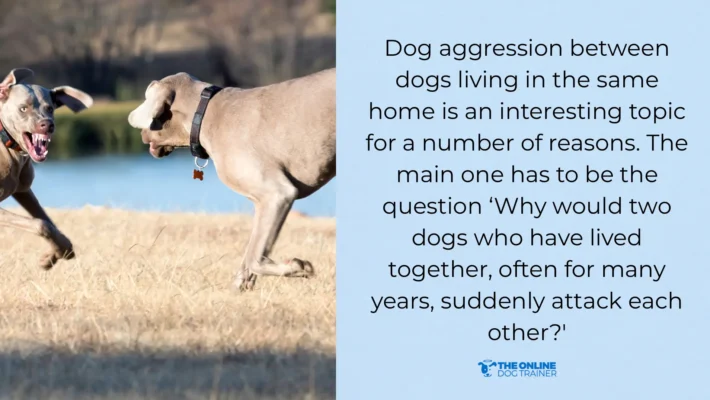
Credit: theonlinedogtrainer.com
Frequently Asked Questions
How Can I Stop My Dog’s Aggression Towards Other Dogs?
Start by identifying triggers causing aggression. Use positive reinforcement and gradual socialization. Consult a professional trainer if needed. Consistency and patience are key to success.
What Are Effective Training Techniques For Aggressive Dogs?
Use desensitization and counter-conditioning methods. Reward calm behavior near other dogs. Avoid punishment as it increases aggression. Professional guidance ensures safe and effective training.
When Should I Seek Professional Help For Dog Aggression?
If aggression is severe or dangerous, seek a trainer or behaviorist immediately. Early intervention prevents escalation and ensures safety for your dog and others.
Can Socialization Reduce My Dog's Aggression To Other Dogs?
Yes, controlled socialization helps dogs learn proper behavior. Introduce your dog gradually to calm dogs. Positive experiences reduce fear and aggression over time.
Conclusion
Training an aggressive dog requires patience and consistency. Focus on positive reinforcement. Reward good behavior with treats and praise. Socialize your dog gradually with calm, friendly dogs. Use a leash for control during interactions. Always stay calm and confident. Avoid punishments or harsh corrections.
Seek professional help if needed. A dog trainer can offer valuable guidance. Safety comes first for both dogs and owners. With time and effort, your dog can improve. Build trust and strengthen your bond. Remember, every small step counts. Keep practicing and stay committed.
Your dedication makes a big difference.