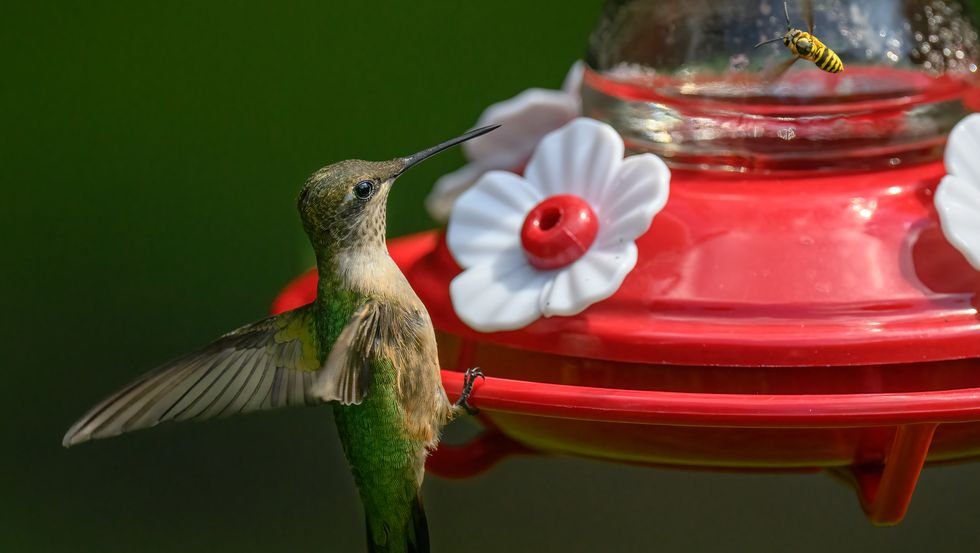
Are you tired of seeing bees swarm around your hummingbird feeder, chasing away the tiny birds you want to enjoy? It can be frustrating to watch these busy insects take over your feeder, making it hard for hummingbirds to get their sweet nectar.
But don’t worry—you can keep bees out without harming them or your feathered friends. In this post, you’ll discover simple, effective tips to protect your feeder and bring back the peaceful hummingbird visits you love. Keep reading to find out how to make your feeder a bee-free zone!

Credit: www.countryliving.com
Why Bees Are Attracted To Feeders
Understanding why bees are drawn to hummingbird feeders can help you manage the problem more effectively. Bees are naturally attracted to sweet substances, and your feeder provides an easy source of sugar. But there are other factors at play beyond just the sweetness.
Sugar Content And Bee Attraction
Bees have a strong preference for sugary liquids, which they use as an energy source. Your hummingbird feeder’s nectar, usually made from sugar and water, is irresistible to them.
Did you know that bees can detect sugar concentrations as low as 5%? Hummingbird feeders often have sugar levels around 20%, making them a prime target.
Lowering the sugar content might make feeders less appealing to bees, but it can also reduce attractiveness for hummingbirds. Finding the right balance is key.
Feeder Design Factors
The shape and color of your feeder can influence bee visits. Bright red feeders attract hummingbirds but can also lure bees and wasps.
Feeders with bee guards or smaller feeding ports help limit bee access without stopping hummingbirds. Plastic feeders are easier to clean and maintain, which discourages bee buildup.
Have you noticed that feeders with perches tend to invite more bees? Removing perches can reduce their landing spots, making it harder for bees to settle.
Common Bee Behavior Around Feeders
Bees often swarm around feeders, especially during hot weather when natural nectar sources are scarce. They can become territorial and aggressive, which might scare away hummingbirds.
Bees also communicate with others about food sources through pheromones, so once one finds your feeder, many more can follow quickly.
Observing your feeder at different times of the day can reveal when bees are most active. Early morning or late evening visits might help you identify patterns and adjust feeding schedules.
Choosing Bee-resistant Feeders
Choosing the right feeder is one of the smartest moves you can make to keep bees away from your hummingbird feeder. Not all feeders are created equal when it comes to deterring bees, so selecting a design that naturally resists their presence can save you frustration and help your hummingbirds thrive.
Feeders With Bee Guards
Feeders with built-in bee guards are specially designed to block bees from reaching the nectar while still allowing hummingbirds easy access. These guards often look like small plastic or metal barriers around the feeding ports.
I once switched to a feeder with bee guards and noticed a dramatic drop in bee visits within days. Your hummingbirds won't struggle to feed, but bees will find it much harder to get to the sweet nectar.
Color And Shape Considerations
Bees are attracted to bright colors, especially yellow. Choosing feeders that are primarily red or have a red base can make a big difference because hummingbirds are drawn to red, but bees are not.
Also, feeders with narrow feeding ports and unique shapes can discourage bees. Simple round openings invite bees, while shapes that limit their landing space can keep them away effectively.
Materials That Discourage Bees
Some materials naturally repel bees more than others. Glass feeders are less appealing to bees compared to plastic ones, which can sometimes trap heat and attract them.
Metal feeders or those with smooth, slippery surfaces can also reduce bee landings. You might want to experiment with different materials to see which works best in your garden.
Placement Strategies To Avoid Bees
Keeping bees away from your hummingbird feeder can be tricky. Placement plays a big role in this. By placing your feeder carefully, you can reduce bee visits. This helps hummingbirds feed peacefully without competition or disturbance.
Positioning Away From Flowering Plants
Bees are naturally drawn to flowers for nectar. Placing your feeder far from blooming plants can lower bee visits. Choose a spot with fewer or no flowering plants nearby. This reduces the chance bees will find the feeder while searching for food.
Height And Location Tips
Hang your feeder at a height that hummingbirds prefer but bees avoid. Usually, 4 to 6 feet above the ground works well. Place it in a shaded area to keep the nectar cooler. Avoid sunny spots where bees are more active and nectar heats up quickly.
Using Barriers And Shields
Barriers can block bees without stopping hummingbirds. Use bee guards that cover feeding ports. These small screens allow hummingbirds access but keep bees out. You can also hang lightweight shields above or around the feeder to deter bees from landing nearby.

Credit: www.hummingbirdsociety.org
Adjusting Nectar Recipes
Adjusting nectar recipes helps keep bees away from your hummingbird feeder. Bees are attracted to sweet substances, but careful nectar preparation can discourage them. Changing the sugar ratio, avoiding certain additives, and refreshing nectar often all play a role.
Optimal Sugar Ratios For Hummingbirds
Hummingbirds prefer a sugar solution that mimics natural flower nectar. Use a ratio of 1 part white granulated sugar to 4 parts water. This ratio provides enough energy for hummingbirds but is less appealing to bees. Avoid using honey or brown sugar because they attract more insects and ferment quickly.
Avoiding Additives That Attract Bees
Do not add red dye or artificial sweeteners to the nectar. These can attract more bees and other insects. Plain sugar water is best. Avoid adding fruit juice or any kind of syrup, as they increase bee visits. Keep the feeder clean and free of spilled nectar to reduce attraction.
Frequency Of Changing Nectar
Change the nectar every two to three days in warm weather. Old nectar ferments and attracts bees and ants. In cooler weather, change nectar at least once a week. Clean the feeder thoroughly before refilling. Fresh nectar keeps hummingbirds happy and reduces bee problems.
Maintenance And Cleaning Tips
Keeping your hummingbird feeder clean is essential to discourage bees and other unwanted visitors. Proper maintenance not only protects the nectar but also ensures the health of the hummingbirds. Small habits in cleaning can make a big difference in keeping bees away.
Regular Feeder Cleaning
Cleaning your feeder every few days is key. Use warm water and a mild soap to wash all parts thoroughly. Avoid harsh chemicals that can harm the birds or leave residues attracting insects.
Rinse well to remove any soap traces. Let the feeder dry completely before refilling it with fresh nectar. This routine prevents sticky buildup that bees love.
Removing Spilled Nectar
Check around your feeder for spilled nectar frequently. Nectar on the feeder’s exterior or nearby surfaces acts like a beacon for bees. Wipe away any drips or sticky spots immediately using a damp cloth.
Consider placing a tray or saucer underneath to catch spills. This simple trick reduces mess and keeps the area less appealing to bees.
Preventing Mold And Fermentation
Old nectar can ferment or grow mold, which not only attracts bees but also harms hummingbirds. Replace nectar every 2-3 days, or more often in hot weather. Store nectar in the fridge if you prepare it in advance.
Using a solution of one part white vinegar to four parts water for cleaning can help prevent mold growth. Have you noticed how quickly nectar turns sour on warm days? Staying on top of this can save you from bigger problems.

Credit: uk.style.yahoo.com
Natural Bee Deterrents
Natural bee deterrents offer gentle ways to protect hummingbird feeders. These methods avoid chemicals and keep bees from invading your nectar stations. They work by using plants and sprays that bees dislike or by giving bees other food sources.
Planting Bee-repellent Herbs Nearby
Some herbs naturally keep bees away. Planting these around your feeder helps create a barrier.
- Mint:Its strong smell deters bees and other insects.
- Lavender:Bees avoid its scent, but hummingbirds like it.
- Citronella:Known for repelling many flying insects, including bees.
- Rosemary:Its aroma keeps bees at bay without harming birds.
Place these herbs close to your feeder but not too near flowers that attract bees.
Using Safe Deterrent Sprays
Sprays made from natural ingredients keep bees away without harming hummingbirds. Use these sprays on the feeder's poles and surrounding areas, avoiding the nectar itself.
- Mix water with a few drops of peppermint or eucalyptus oil.
- Spray early morning or late evening for best results.
- Reapply after rain or watering the plants nearby.
These sprays confuse bees and make the area less inviting.
Creating Alternative Bee Food Sources
Offering bees their own food spots can reduce their interest in hummingbird feeders. Set up sugar water stations away from the hummingbird area.
- Use shallow dishes with sugar water diluted like hummingbird nectar.
- Place these dishes in shaded spots to attract bees safely.
- Change the sugar water frequently to prevent fermentation and mold.
By giving bees a separate feeding zone, you protect the hummingbirds’ space.
Frequently Asked Questions
How Can I Prevent Bees From Reaching Hummingbird Feeders?
Use bee guards or feeders with bee-proof ports. Place feeders in shaded areas and clean spills promptly. These steps discourage bees without harming hummingbirds.
What Type Of Feeder Keeps Bees Away Effectively?
Feeders with bee guards or red-colored ports are best. They allow hummingbirds easy access but block bees from feeding areas.
Does The Nectar Recipe Affect Bee Attraction?
Yes, reduce sugar concentration to 1:5 instead of 1:4. Bees prefer sweeter nectar, so less sugary solutions help deter them.
Where Should I Hang Feeders To Avoid Bees?
Hang feeders in shaded, breezy spots away from flowers. This location makes it harder for bees to find and swarm the feeders.
Conclusion
Keeping bees away from your hummingbird feeder requires simple steps. Use feeders with bee guards. Choose red feeders as bees dislike red. Place feeders away from bee-friendly flowers. Clean feeders regularly to remove sugary residues. Try using decoy feeders for bees.
These strategies help maintain peace in your garden. Hummingbirds can enjoy their nectar undisturbed. Bees play their role elsewhere. Enjoy watching hummingbirds without worry. Your garden remains a serene haven. Stay consistent with these practices. Balance nature in your backyard.
It's easy and rewarding. Happy birdwatching!