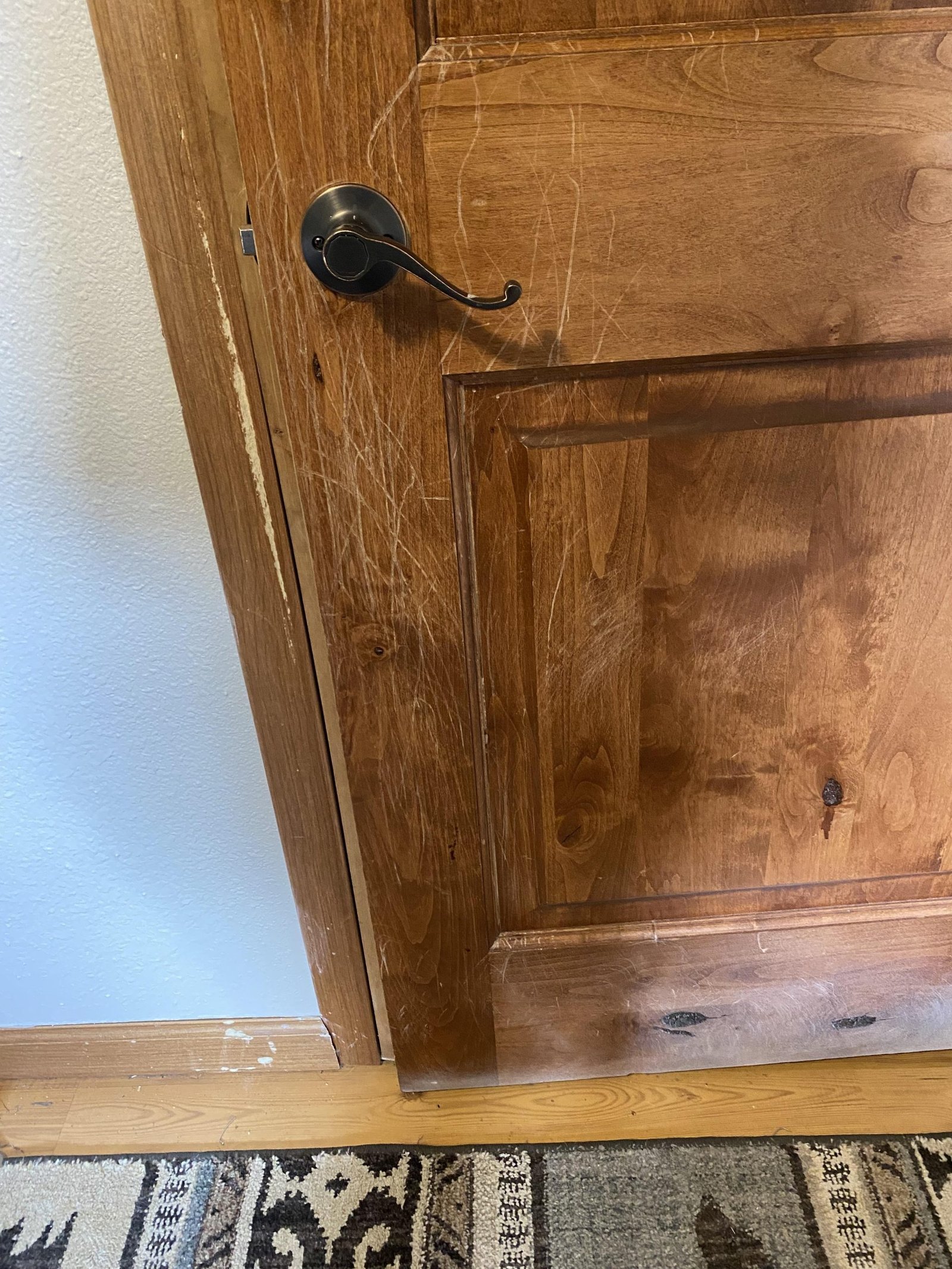
Have you noticed scratches on your wood door and wondered how to fix them quickly? Dog scratches can make your beautiful door look worn and damaged, but the good news is you don’t have to replace it.
You can restore your door’s smooth finish with simple steps that anyone can follow. Keep reading, and you’ll learn easy, effective ways to erase those scratches and bring your door back to life. Your home deserves to look its best, and you’re just moments away from making that happen.
Assessing The Damage
Before you dive into fixing dog scratches on your wood door, take a moment to carefully assess the damage. Understanding how deep and extensive the scratches are will save you time and help you choose the right repair method. This step can make all the difference between a quick fix and a more involved restoration.
Identifying Scratch Depth
Look closely at each scratch. Is it a light surface mark or a deep gouge? Run your fingernail over the scratch—if it catches, the damage is likely deeper and will need more than just a simple polish.
Shallow scratches might only affect the finish, which means you can easily buff them out or apply a touch-up marker. Deep scratches, however, may expose the raw wood and could require filling or sanding. Knowing this helps you avoid wasting effort on ineffective fixes.
Checking Door Material
Not all wood doors are the same. Is your door solid wood, veneer, or laminate? Each material reacts differently to repair techniques, so identifying it early is essential.
For instance, solid wood can be sanded and refinished without much trouble. Veneer doors need gentle treatment to avoid peeling, and laminate surfaces often require specific repair kits. Have you checked your door’s edges or inside the frame for material clues? This can guide your approach.
Credit: www.lumberjocks.com
Gathering Repair Materials
Before fixing dog scratches on a wood door, gather all necessary materials. Having the right tools and products saves time and ensures a smooth repair. Prepare a clean workspace to keep everything organized. This step helps avoid interruptions during the repair process.
Essential Tools
- Sanding block or fine-grit sandpaper
- Putty knife or plastic scraper
- Soft cloth or tack cloth
- Small paintbrush or foam brush
- Protective gloves
- Masking tape (optional for protecting surrounding areas)
Recommended Products
- Wood filler or wood putty matching the door color
- Wood stain or touch-up markers
- Clear wood finish or varnish
- Mild wood cleaner
- Wood polish for final shine
Preparing The Door Surface
Before fixing dog scratches on your wood door, preparing the surface properly is essential. A clean, smooth area helps the repair materials stick better and ensures a neat finish. Taking the time to prep the door can save you from future touch-ups and give your door a refreshed look.
Cleaning The Area
Start by removing dirt, dust, and oils from the scratched surface. Use a mild soap mixed with water and a soft cloth to gently clean the area. Avoid harsh chemicals that can damage the wood or strip its finish.
After washing, dry the door thoroughly with a clean towel. This step prevents moisture from interfering with the repair process. Have you noticed how even tiny dust particles can ruin a smooth finish? That’s why a spotless surface is non-negotiable.
Sanding Rough Edges
Scratches often leave rough edges or splinters that need smoothing out. Use fine-grit sandpaper (around 220 grit) to gently sand these areas. Sand in the direction of the wood grain to avoid creating new scratches.
Take your time and check the surface frequently. Sanding too much can damage the wood further, while too little will leave the repair uneven. If you’ve ever skipped this step, you might have noticed how filler or paint peels off quickly—don’t let that happen to your door.
Credit: www.vibrantdoors.co.uk
Filling Scratches
Filling scratches on a wood door helps restore its smooth look. The right filler fills gaps and blends with the wood. This step is vital for a neat finish. Preparing the scratch and choosing a good filler make repairs last longer.
Choosing The Right Filler
Select a filler that matches your door’s wood type and color. Wood fillers come in different forms like putty, paste, or sticks. Some dry fast, while others need more time. Pick a product that sands easily and holds paint or stain well.
- For deep scratches, use a thicker wood filler.
- For shallow scratches, a light putty works best.
- Consider stainable fillers for a natural wood look.
Applying Wood Filler
Start by cleaning the scratched area with a soft cloth. Remove dust and dirt to help the filler stick better. Use a putty knife to press the filler into the scratch. Overfill slightly to cover the area fully.
Let the filler dry completely. Drying times vary by product and temperature. Once dry, sand the area smoothly with fine sandpaper. Sand until the filled spot is level with the door’s surface.
Finish by wiping away dust. The door is now ready for paint or stain. Filling scratches properly keeps your wood door looking new longer.
Sanding And Smoothing
Sanding and smoothing are crucial steps to repair dog scratches on wood doors. These steps help remove rough edges and prepare the surface for finishing. Proper sanding creates a smooth, even texture that blends well with the rest of the door. This process also ensures the repair lasts longer and looks neat.
Drying Time
After filling deep scratches with wood filler, allow it to dry completely. Drying times vary based on the product used and room temperature. Usually, drying takes between 30 minutes to a few hours. Avoid sanding before the filler is fully dry to prevent uneven surfaces and damage.
Check the filler by gently touching the area. If it feels hard and firm, it is ready for sanding. Patience here is key for a smooth finish.
Sanding Techniques
Start sanding with medium-grit sandpaper, like 120 grit, to remove excess filler and scratches. Move the sandpaper in the direction of the wood grain to avoid new scratches. Use light, even pressure to prevent gouging the wood.
After the surface is smooth, switch to fine-grit sandpaper, such as 220 grit. This step refines the texture and prepares the door for staining or painting. Clean the dust with a soft cloth before applying any finish.
- Sand gently along the grain
- Use a sanding block for even pressure
- Check your progress frequently
- Remove all dust before finishing
Staining And Painting
Fixing dog scratches on a wood door often means more than just sanding down the damaged area. Staining and painting help restore the door’s appearance and protect the wood from further harm. This process requires careful color matching and the right finishing touches to blend repairs seamlessly.
Matching Wood Color
Choosing the correct stain color is key to making scratches disappear. Wood tones vary widely, so test several stain samples on a hidden spot of the door before committing. This trial helps you see how the wood absorbs the stain and how it looks once dry.
Don’t rush this step. Even a slight color mismatch can make the repair obvious. If you struggle to find an exact match, mixing two stains can create a custom shade that fits your door perfectly.
Applying Finish Coats
After staining, you need to protect the surface with a finish coat. Clear polyurethane or varnish works well to seal the wood and add durability. Apply thin, even layers with a brush, allowing each coat to dry fully before adding the next.
How many coats do you need? Usually, two or three are enough to restore the door’s smooth texture and shine. Lightly sanding between coats improves adhesion and results in a more professional look.
Preventing Future Scratches
Preventing future scratches on wood doors helps maintain their beauty and lifespan. Dogs can scratch doors out of boredom, anxiety, or the urge to explore. Stopping these behaviors protects your doors and keeps your pet safe. Simple tools and training can reduce scratching and improve your home's look.
Using Door Protectors
Door protectors act as a barrier between your dog's claws and the wood. They come in various forms like clear plastic guards or metal kick plates. These protectors are easy to install and clean. They stop scratches without changing the door's appearance. Protectors also save you time and money on repairs.
Training Your Dog
Training your dog is key to preventing scratches. Teach your pet to stay calm near doors. Use commands like "sit" or "stay" to control their behavior. Reward your dog with treats for good behavior. Redirect scratching to toys or scratching posts. Consistent training builds good habits that last.

Credit: www.vibrantdoors.co.uk
Frequently Asked Questions
How To Repair Deep Dog Scratches On Wood Doors?
To repair deep scratches, sand the area gently first. Then apply wood filler to fill the grooves. Once dry, sand smooth and match with stain or paint to blend with the door’s finish.
What Household Items Fix Minor Wood Door Scratches?
You can use walnut or a mixture of vinegar and olive oil. Rub the walnut or mixture on scratches to reduce their appearance. These natural remedies help blend scratches without harsh chemicals.
Can Wood Door Scratches Be Prevented From Dogs?
Yes, regular nail trimming and training your dog to avoid doors help. Placing protective films or mats near doors also prevents scratches. Consistency in these methods keeps your wood doors scratch-free.
How Long Does It Take To Fix Dog Scratches On Wood?
Fixing minor scratches usually takes 15-30 minutes. Deep scratches may require several hours due to drying time for fillers and stains. Quick fixes are possible with natural remedies for surface-level scratches.
Conclusion
Fixing dog scratches on a wood door is doable. Simple steps can restore your door's charm. Use sandpaper to smooth the scratches. Apply wood filler for deeper marks. Match the color with wood stain. Finish with a protective seal. Patience and care make all the difference.
Your door will look almost new again. Keep dog's nails trimmed to prevent future damage. Regular maintenance ensures longevity. Enjoy your scratch-free wood door and happy pet.