Are you unsure how much fresh meat to feed your dog? Getting the right amount can make a big difference in your dog’s health and happiness.
Too little, and your furry friend might miss out on essential nutrients. Too much, and you could face digestion problems or weight gain. You’ll discover simple, practical tips to find the perfect balance for your dog’s fresh meat meals. Keep reading to give your pet the nutrition they deserve without any guesswork.
Factors Influencing Meat Portions
Determining the right amount of fresh meat for your dog depends on several factors. These factors help ensure your dog receives enough nutrients without overeating. Adjusting portions according to these elements supports your dog’s health and energy.
Dog's Size And Breed
Large dogs need more meat than small dogs. Bigger breeds burn more calories daily. Smaller breeds require less food but still need balanced nutrition. Some breeds have unique dietary needs due to their metabolism or body structure.
Activity Level
Active dogs use more energy and need more meat to fuel their bodies. Dogs that exercise, work, or play a lot require higher protein amounts. Sedentary dogs need fewer calories to avoid weight gain. Adjust portions based on how much your dog moves each day.
Age And Health Status
Puppies need more protein and calories to grow strong. Older dogs may need less meat and more fiber for digestion. Dogs with health issues, like kidney problems, often require special diets. Always check with a vet to tailor portions for your dog’s health.

Credit: houndandbone.ca
Calculating Daily Meat Intake
Feeding fresh meat to your dog requires careful measurement. The right amount ensures proper nutrition without overfeeding. Calculating daily meat intake depends on several factors like your dog's size and health. This section explains how to find the right daily portion for your dog.
Recommended Percentage Of Body Weight
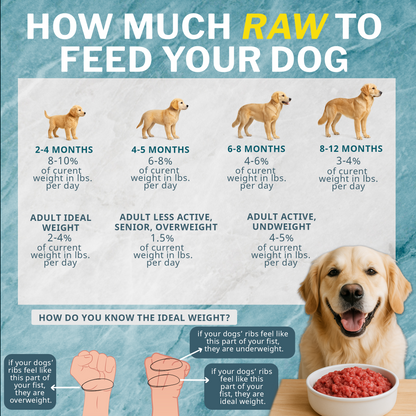
Most dogs need fresh meat equal to 2% to 3% of their body weight daily. This range supports healthy energy and muscle maintenance. For example, a 20-pound dog should get between 0.4 and 0.6 pounds of meat each day.
Use this simple calculation:
- Weight of dog (in pounds) × 0.02 = minimum meat amount
- Weight of dog (in pounds) × 0.03 = maximum meat amount
Adjust within this range based on activity and metabolism. Active dogs may need closer to 3%, while less active dogs can have 2%.
Adjusting Portions For Growth And Weight Loss
Growing puppies need more protein for development. Increase fresh meat to 4% of their body weight during growth phases. This helps build strong muscles and bones.
For dogs losing weight, reduce meat to 1% to 1.5% of body weight. Lower portions help control calorie intake. Combine with exercise for best results.
Always monitor your dog’s condition. Adjust portions gradually to avoid digestive issues. Consult a vet for special dietary needs.
Balancing Meat With Other Nutrients
Feeding your dog fresh meat is a great way to provide essential protein and nutrients. However, meat alone doesn't cover all the dietary needs your dog has. Balancing meat with other nutrients ensures your dog stays healthy, energetic, and happy.
Incorporating Vegetables And Grains
Vegetables and grains add fiber, vitamins, and minerals that meat lacks. Adding small amounts of cooked carrots, green beans, or pumpkin can aid digestion and improve stool quality.
Whole grains like brown rice or oats provide energy and help keep your dog's weight steady. You don’t need to add large portions—start with a tablespoon or two mixed into their meat.
Have you tried mixing a little quinoa or sweet potato with your dog’s meat? These options are gentle on the stomach and offer a variety of nutrients.
Adding Supplements And Vitamins
Even with a balanced meal, some nutrients might be missing, like omega-3 fatty acids or calcium. You can add fish oil or ground eggshells to cover these gaps.
Multivitamin supplements designed for dogs can also help fill in the blanks. But be careful not to overdose—consult your vet to get the right dosage for your dog’s size and needs.
Think about your dog’s unique health concerns. Would adding glucosamine help with joint health? Tailoring supplements to your dog’s lifestyle can make a big difference.
Choosing The Right Types Of Meat
Choosing the right types of meat is key to a dog’s health. Different meats offer various nutrients that support energy, growth, and overall wellness. Not all meats are safe, so selecting quality options matters a lot. Understanding benefits and risks helps in making smart choices for your dog’s diet.
Benefits Of Different Meats
- Chicken:High in protein and easy to digest.
- Beef:Rich in iron and supports muscle strength.
- Lamb:Good for dogs with food sensitivities.
- Turkey:Low-fat and packed with vitamins.
- Fish:Contains omega-3 fatty acids for a shiny coat.
Each meat provides unique nutrients. Rotating meats can offer a balanced diet. Freshness and quality improve nutrient value.
Avoiding Harmful Meats And Additives
- Avoid processed meats with preservatives or flavorings.
- Stay away from pork, as it can carry parasites.
- Do not feed cooked bones; they can splinter and hurt.
- Skip meats with added salt, spices, or sauces.
- Raw fish must be handled carefully to prevent parasites.
Choose fresh, plain cuts without additives. Safety protects your dog’s health. Always check for freshness and proper storage.
Preparing Fresh Meat Safely
Preparing fresh meat safely is key for your dog's health. Fresh meat can carry bacteria that cause illness. Proper care helps keep meat fresh and safe to eat. Handling meat correctly lowers health risks for your pet.
Storage And Handling Tips
- Keep fresh meat cold at or below 40°F (4°C).
- Store meat in sealed containers to avoid contamination.
- Use fresh meat within two days of purchase.
- Freeze meat if you plan to store it longer than two days.
- Thaw frozen meat in the fridge, not on the counter.
- Wash hands before and after touching raw meat.
- Clean all surfaces and utensils with hot, soapy water.
- Separate raw meat from other foods to prevent cross-contamination.
Cooking Vs. Raw Feeding
Raw feeding means giving your dog uncooked meat. It keeps nutrients intact but carries bacteria risk. Cooking meat kills harmful bacteria and parasites. Cooking lowers the chance of illness but can reduce some nutrients.
Choose raw or cooked based on your dog's needs and your comfort. Monitor your dog’s health and consult your vet for advice. Safe preparation and hygiene protect your dog’s well-being.

Credit: www.justfoodfordogs.com
Monitoring Your Dog's Response
Feeding your dog fresh meat is a great way to provide essential nutrients, but how do you know if you’re giving the right amount? Monitoring your dog’s response is key to ensuring their health and happiness. Paying close attention to how your dog reacts to the new diet can help you make smart adjustments before problems arise.
Signs Of Nutritional Deficiency
Watch for changes in your dog's coat, energy levels, and digestion. A dull, brittle coat or excessive shedding might mean your dog is missing vital fatty acids or vitamins. Low energy or lethargy can signal a lack of protein or calories.
Digestive issues like diarrhea or constipation are also red flags. If your dog’s stool becomes loose or unusually hard, it could indicate that the diet isn’t balanced properly. Keep an eye on their appetite too—loss of interest in food can point to nutritional gaps.
- Dry or flaky skin
- Weight loss or gain
- Persistent bad breath or dental issues
- Frequent infections or slow healing wounds
Adjusting Diet Based On Health
If you notice any of these signs, don’t panic. Instead, tweak your dog’s fresh meat portions gradually. Sometimes, adding more organ meat or a small amount of vegetables can balance nutrients better.
Also, consider the dog's breed, age, and activity level when adjusting. A highly active dog may need more protein, while a senior dog might require fewer calories but more joint-supporting nutrients. Have you checked if your dog needs supplements like omega-3 or calcium?
Keep a simple journal to track changes in weight, behavior, and digestion. This helps you spot trends and decide if the current amount of fresh meat is working. Regular vet check-ups are invaluable—they can run blood tests to confirm your dog’s nutritional status and advise on any dietary changes.

Credit: wefeedraw.com
Frequently Asked Questions
How Much Fresh Meat Should I Feed My Dog Daily?
Feed your dog 2-3% of its body weight in fresh meat daily. Adjust based on activity, age, and health for best results.
Is Fresh Meat Alone Enough For A Dog’s Diet?
No, fresh meat alone lacks essential nutrients. Include vegetables, grains, and supplements for a balanced diet.
Can Puppies Eat The Same Amount Of Fresh Meat?
Puppies need more protein and calories. Feed them 4-6% of their body weight in fresh meat daily.
How To Safely Introduce Fresh Meat To My Dog?
Start with small portions mixed with regular food. Gradually increase fresh meat over 7-10 days to avoid digestive issues.
Conclusion
Feeding your dog fresh meat can improve their health. Dogs get vital nutrients from meat. Balance is key. Too much or too little can cause issues. Consult your vet for guidance. They can help determine the right amount. Consider your dog's size and activity level.
Monitor your dog's weight and adjust portions as needed. Fresh meat should complement, not replace, a balanced diet. Aim for variety. A healthy diet can lead to a happy, active dog. Your furry friend deserves the best care. Keep learning and stay informed.
Your dog will thank you for it.